New Fidelity
Love in the Time of CholeraNew Fidelity is a locally built steamer whose name recalls the beginnings of navigation on the Magdalena River and whose changing fortunes shape the last voyage of Fermina Daza and Florentino Ariza. Designed to display modern comfort, the boat carries a Presidential Suite that Florentino had privately imagined as the setting for a wedding journey. Its voyage instead becomes a test of that vision: environmental ruin leaves the vessel stranded and its amenities failing, while the delay gives the elderly lovers time to approach one another. At the end, Florentino orders the ship back upriver beneath the yellow cholera flag, converting a public warning into the means of their continued journey together.
Origins and design
In January 1824, Commodore Johann Bernard Elbers registered Fidelity, a primitive, forty-horsepower steamboat remembered as the first to sail the Magdalena River. More than a century later, New Fidelity was built in local shipyards and named in its predecessor’s memory. Fermina Daza cannot decide whether the name’s significance for her and Florentino is historical coincidence or another product of his chronic romanticism: the vessel’s name already joins the river’s public history to the private story he hopes to make with her.
New Fidelity’s most conspicuous feature is the Presidential Suite, placed beside the Captain’s quarters. It contains a colorful bamboo-furnished sitting room, a double bedroom decorated with Chinese motifs, a bathroom with a tub and shower, and an enclosed observation deck with hanging ferns and open views toward the bow and both sides. A silent cooling system keeps outside noise away and maintains what feels like perpetual spring. Three presidents have already traveled in the suite, which has no commercial purpose and is reserved for high officials and special guests. Florentino had ordered it built for that public function after becoming President of the R.C.C.; privately, he believed that it would one day serve as a joyful refuge for his honeymoon with Fermina.
That private hope comes true in altered form when Fermina takes possession of the suite as its mistress. On her first river voyage, she boards at six in the evening on July 7, accompanied by Dr. Urbino Daza and his wife. The Captain, Diego Samaritano, welcomes them and Florentino with champagne and smoked salmon. His immaculate white linen uniform bears the R.C.C. insignia in gold thread, a polished public face for the journey that soon proves less controlled than its luxurious quarters promise.
A vessel made for an intimate voyage
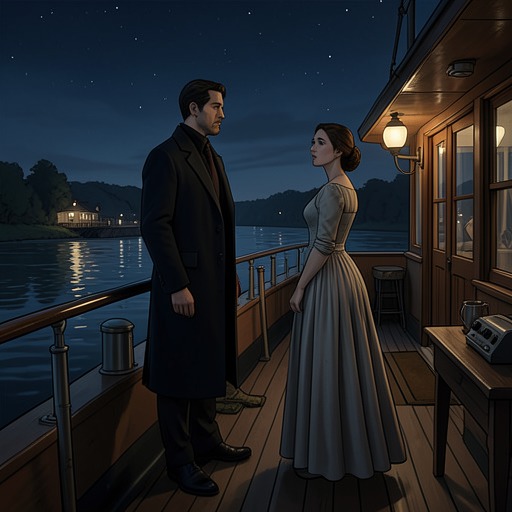
At first the suite’s enclosure gives Fermina and Florentino a sheltered world aboard the boat. On a later evening, after the passengers’ dancing has begun, Fermina withdraws to her cabin, quiet and absorbed in her thoughts. She is not tired, only a little cold, and invites Florentino to sit with her on her private deck. He brings out two wicker chairs, turns off the lights, and places a woolen shawl around her shoulders. She rolls cigarettes from the tobacco he has brought; he drinks mountain coffee from two thermoses and passes the cigarettes to her already lit.
From the darkened deck, the river under the full moon and the pastureland along both banks appear as a phosphorescent plain. Straw huts and great bonfires mark places where wood is sold for the boilers. Florentino recalls his earlier journey and tells Fermina some of its memories, but she remains in another world. He stops trying to animate her with his past and sits beside her, making and lighting cigarettes until the box is empty. After the music and passengers fall away, the pair remain alone in the shadows, their hearts keeping time with the breathing of the ship.
When Florentino sees that Fermina is crying, he asks whether she wants to be alone. She answers that she would not have invited him in if she did. In the darkness he reaches with icy fingers for her hand and finds it waiting. Both recognize that the old hands they touch are not the hands they once imagined, yet the recognition does not break the moment. Fermina speaks of her dead husband in the present tense, then considers what to do with the love left behind. Holding Florentino’s hand, she remembers that her marriage contained more difficulties than pleasures—misunderstandings, arguments, and unresolved anger—and wonders whether happiness through all those years had really been love. The ship’s enclosed deck becomes a place where memory and present desire can coexist without an easy answer.
The river’s decline and the suite’s failure
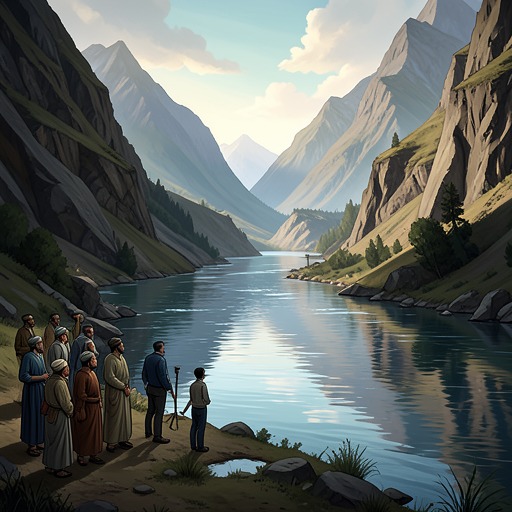
The comfortable enclosure cannot insulate the voyage from the river’s deterioration. As the days grow hot and interminable, the water narrows and turns muddy. Forests once remembered for their immense trees have been stripped to supply the boats’ boilers; flooded, ruined villages and the stench of bodies replace the older landscape. There are no more wars or epidemics, the Captain says, and passengers are told that the floating corpses are accidental drowning victims. The former abundance of animal life gives way to silence across the ravaged land.
By the fourth day, New Fidelity runs out of fuel. With wood-buying places scarce and far apart, the vessel is stranded for almost a week while its crew searches ash-filled marshes for the last scattered trees. Woodcutters have abandoned their trails, escaping powerful local landowners, invisible cholera, and wars that the government tries to conceal with distracted decrees. The passengers fill the enforced wait with swimming contests and hunting expeditions; they return with live iguanas, remove their eggs, and string the clusters over the railings to dry. Prostitutes from nearby villages set up makeshift tents on the shore and hold noisy revels across the river from the stranded boat.
The delay exposes Florentino’s own neglect. Before becoming President of the R.C.C., he had received alarming reports on the river’s condition but barely read them, reassuring his associates that oil-powered boats would arrive before the wood ran out. His passion for Fermina had further clouded his attention. By the time the scale of the decline is clear, there seems to be no remedy except to bring in a new river. The suite’s failure is therefore not merely a malfunction of luxury: its cooling system and the ship’s fuel depend on a landscape being consumed around them.
For the first three days, Fermina and Florentino have been sheltered by the suite’s artificial spring. Once wood is rationed, the cooling system begins to fail and the room turns into a steam bath. Fermina endures the nights with river air from the open windows and waves away mosquitoes with a towel because the insecticide bomb is useless while the boat is anchored. Her earache grows unbearable; one morning it stops abruptly, and only later does she understand that the hearing in her left ear is gone. She tells no one, accepting the loss as one of old age’s irremediable defects.
The stranding also gives the lovers time. Florentino recalls the maxim, “Love becomes greater and nobler in calamity.” In the humid suite, the two spend long hours holding hands in the armchairs by the railing, exchanging unhurried kisses and caresses. On the third night Fermina waits for him with anisette, a drink she has kept for herself on other occasions in her life. He takes it as a sign that she is gathering courage for a final step. The same conditions that make the ship uncomfortable—the heat, delay, and enforced closeness—loosen the expectations that had kept their intimacy at a distance.
The cholera flag and the continuing voyage
Near the end of the voyage, the Captain is trapped by the implications of sailing under the cholera flag. Florentino listens and, looking from the mariner’s compass to the clear horizon and navigable water, gives his decision: “Let us keep going, going, going, back to La Dorada.” The order makes the ship’s course an explicit choice rather than a passage governed only by schedule or commercial purpose.
Florentino signs the written order. The continuing presence of cholera, he believes, has not been ended by the health officials’ celebratory statistics. The ship’s small cargo is transferred, the passengers are told that a mechanical failure has occurred, and another company’s vessel carries them onward. New Fidelity is then able to leave without cargo or passengers, with the yellow cholera flag waving from its mainmast. What had been a warning for travelers becomes the condition under which Florentino and Fermina may stay aboard together.
The Captain asks for one stop, at Puerto Nare, to take aboard someone who will accompany him. There they pick up Zenaida Neves, whom he calls his wild woman and describes as an old friend he meets in one port and leaves in another. The voyage becomes a floating celebration. Rain falls heavily, but the ship provides a roof; the crew applauds when Fermina goes to the galley and prepares a dish that Florentino names Eggplant al Amor. The travelers play cards, eat, sleep through gritty siestas, and dance to the orchestra with anisette and salmon. In Magangué, they take on enough wood for the rest of the trip.
When the Captain later faces the predicament of the cholera flag, Florentino does not retreat from the decision. He asks to keep going back to La Dorada, and Fermina recognizes in his voice the force of his former inspiration. New Fidelity has moved from a carefully appointed suite built around a private dream to an exposed vessel carrying a deliberately chosen future. Its name, its failing machinery, and its flag all participate in that change: the river’s history and ecological damage set the limits, while the ship’s continued movement gives the lovers a way to go on together.